

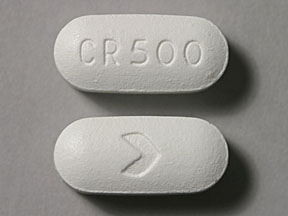
Cipro Coupons & Savings Card – Discount Prices from $4.79
Brand for: Ciprofloxacin hcl
My prescription
Edit
500MG, Ciprofloxacin Hcl (14 Tablets)
Select pharmacy

CVS
$19.57
COUPON PRICE
Walmart
$4.79
COUPON PRICE
Walgreens
$10.69
COUPON PRICE
Albertsons
$14.60
COUPON PRICECipro savings card
Show this card to your pharmacistWalmart
$4.79
BIN
ID
PCN
GRP
019876
LH49164B85
CHIPPO
LHX
Powered by
Related quinolone antibiotics prescriptions
More prescriptions for urinary tract infection
Related quinolone antibiotics prescriptions
More prescriptions for urinary tract infection
Ciprofloxacin Hcl dosage forms
Dosage Quantity Price from Per unit 250MG 2 Tablets $2.70 $1.35 250MG 3 Tablets $2.80 $0.93 250MG 6 Tablets $3.10 $0.52 250MG 10 Tablets $3.50 $0.35 250MG 12 Tablets $3.70 $0.31 250MG 14 Tablets $3.91 $0.28 250MG 20 Tablets $4.51 $0.23 250MG 21 Tablets $4.61 $0.22 250MG 28 Tablets $5.31 $0.19 250MG 30 Tablets $5.51 $0.18
| Dosage | Quantity | Price from | Per unit |
|---|---|---|---|
| 250MG | 2 Tablets | $2.70 | $1.35 |
| 250MG | 3 Tablets | $2.80 | $0.93 |
| 250MG | 6 Tablets | $3.10 | $0.52 |
| 250MG | 10 Tablets | $3.50 | $0.35 |
| 250MG | 12 Tablets | $3.70 | $0.31 |
| 250MG | 14 Tablets | $3.91 | $0.28 |
| 250MG | 20 Tablets | $4.51 | $0.23 |
| 250MG | 21 Tablets | $4.61 | $0.22 |
| 250MG | 28 Tablets | $5.31 | $0.19 |
| 250MG | 30 Tablets | $5.51 | $0.18 |
| 250MG | 40 Tablets | $6.52 | $0.16 |
| 250MG | 60 Tablets | $8.52 | $0.14 |
| 250MG | 90 Tablets | $11.53 | $0.13 |
| 250MG | 98 Tablets | $12.34 | $0.13 |
| 250MG | 100 Tablets | $12.54 | $0.13 |
| 250MG | 500 Tablets | $53.92 | $0.11 |
| 250MG | 1000 Tablets | $84.20 | $0.08 |
| 500MG | 14 Tablets | $4.79 | $0.34 |
| 500MG | 1 Tablet | $2.66 | $2.66 |
| 500MG | 2 Tablets | $2.83 | $1.42 |
| 500MG | 3 Tablets | $2.99 | $1.00 |
| 500MG | 4 Tablets | $3.15 | $0.79 |
| 500MG | 6 Tablets | $3.48 | $0.58 |
| 500MG | 7 Tablets | $3.64 | $0.52 |
| 500MG | 8 Tablets | $3.81 | $0.48 |
| 500MG | 10 Tablets | $4.13 | $0.41 |
| 500MG | 15 Tablets | $4.95 | $0.33 |
| 500MG | 20 Tablets | $5.77 | $0.29 |
| 500MG | 21 Tablets | $5.93 | $0.28 |
| 500MG | 28 Tablets | $7.07 | $0.25 |
| 500MG | 30 Tablets | $7.40 | $0.25 |
| 500MG | 40 Tablets | $9.03 | $0.23 |
| 500MG | 60 Tablets | $12.30 | $0.21 |
| 500MG | 90 Tablets | $17.19 | $0.19 |
| 500MG | 100 Tablets | $18.83 | $0.19 |
| 500MG | 120 Tablets | $22.09 | $0.18 |
| 500MG | 500 Tablets | $71.55 | $0.14 |
| 500MG | 3000 Tablets | $297.80 | $0.10 |
| 500MG | 3600 Tablets | $352.10 | $0.10 |
What is Cipro mainly used for?
Ciprofloxacin, commonly known as Cipro, is primarily used to treat a variety of bacterial infections. It is often prescribed for urinary tract infections, respiratory tract infections, skin infections, and certain types of gastrointestinal infections. It is important to note that Cipro is an antibiotic and is not effective against viral infections.
Is Cipro a strong antibiotic?
Ciprofloxacin, commonly known as Cipro, is considered a broad-spectrum antibiotic. It is effective against a wide range of bacterial infections, which makes it a potent option for treating various conditions. However, its strength and appropriateness depend on the specific type of infection and the susceptibility of the bacteria involved. It is important for a healthcare provider to determine if Cipro is the right choice for a particular infection.
What bacteria does Cipro get rid of?
Ciprofloxacin, commonly known as Cipro, is an antibiotic that is effective against a variety of bacteria. It is used to treat infections caused by both Gram-negative and some Gram-positive bacteria. Some of the bacteria it targets include Escherichia coli, Salmonella, Shigella, Neisseria gonorrhoeae, and Pseudomonas aeruginosa, among others. It is important to use this medication under the guidance of a healthcare professional to ensure it is appropriate for the specific type of bacterial infection.
Is Cipro stronger than amoxicillin?
Ciprofloxacin (Cipro) and amoxicillin are antibiotics that belong to different classes and have different mechanisms of action. Whether one is "stronger" than the other depends on the type of infection being treated and the bacteria involved. Ciprofloxacin is a fluoroquinolone antibiotic, often used for more serious infections or those caused by bacteria resistant to other antibiotics. Amoxicillin is a penicillin-type antibiotic, commonly used for a variety of infections. The choice between them should be based on the specific infection, bacterial susceptibility, and patient factors, as determined by a healthcare provider.
What should you not eat or drink while on ciprofloxacin?
While taking ciprofloxacin, it is advisable to avoid consuming dairy products such as milk or yogurt, and calcium-fortified juices, as they can interfere with the absorption of the medication. Additionally, it is recommended to avoid caffeine and alcohol, as ciprofloxacin can increase the effects of caffeine and may enhance the side effects of alcohol. It is also important to avoid taking ciprofloxacin with antacids or supplements containing calcium, magnesium, aluminum, iron, or zinc, as these can reduce the effectiveness of the medication.